Your first 30 days
Most people who give up cycling do so in the first month, and almost always for reasons that have nothing to do with fitness.
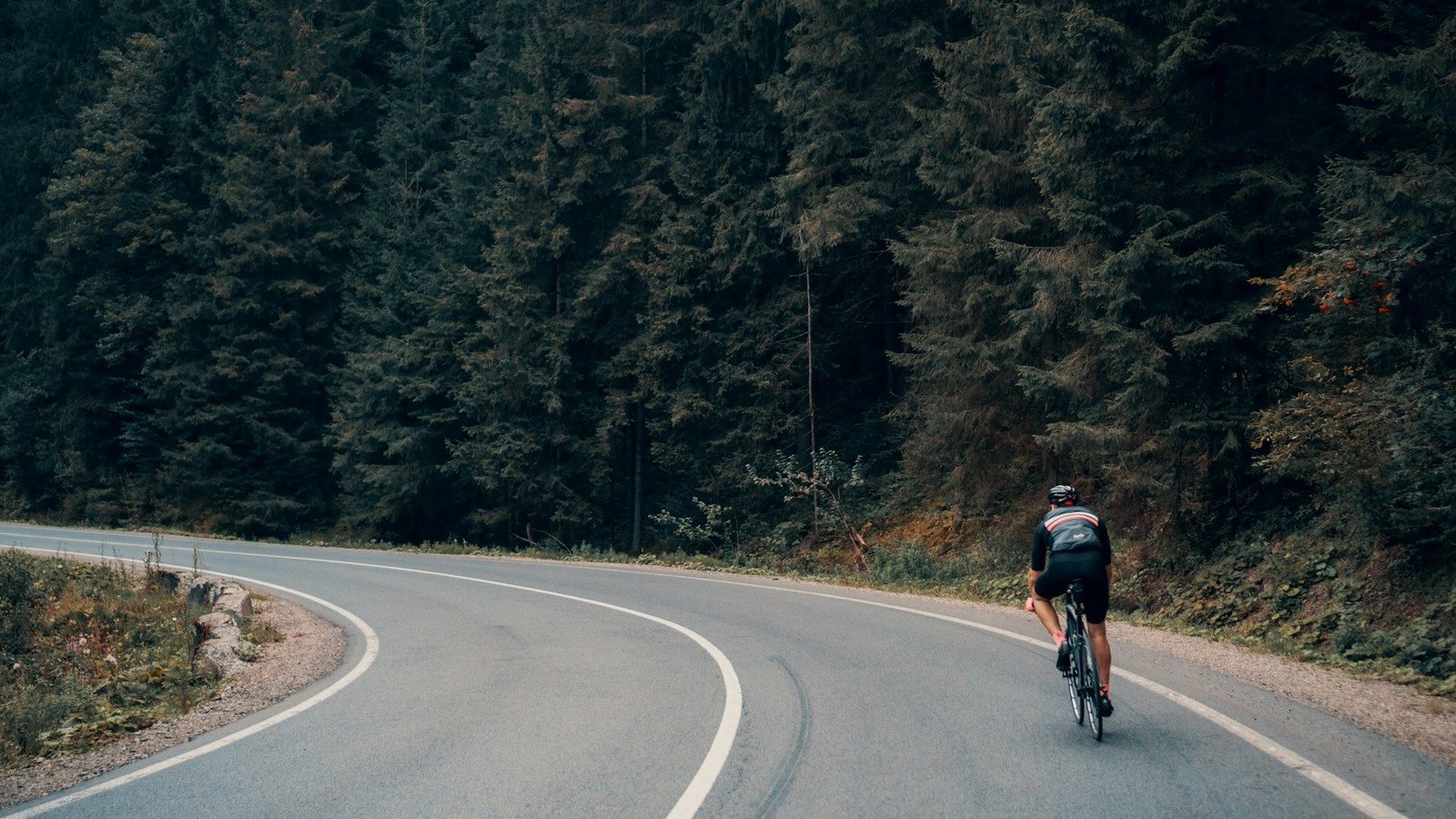
The first month is the one that decides whether cycling sticks. Not because it is physically hard, but because it is where all the friction lives: the bike is unfamiliar, the routes are unknown, small discomforts have not been solved yet, and there is no habit to fall back on.
This is a four-week plan built around removing that friction in order. It assumes no fitness, no experience, and a bike that broadly fits.
The goal for month one is frequency, not distance. Six short rides beat one long one, every time. You are building a habit and letting your body adapt to the position — neither responds well to heroics.
Week 1 — get comfortable with the machine
No distance goals at all this week. The aim is that the bike stops feeling foreign.
- Three rides of 15–20 minutes, somewhere traffic-free
- Practise starting and stopping repeatedly — genuinely, twenty times
- Practise looking over your shoulder without swerving
- Get used to shifting gears while moving, on the flat, with no pressure
- Set your saddle height properly before the first ride
What to expect
Sore sit bones, a stiff neck, and a slight sense of being out of control at low speed. All normal. None of it means the bike is wrong.
Week 2 — build the habit
Now add repetition. The target is riding on more days, not riding further on any one day.
- Four rides of 20–30 minutes
- Introduce one quiet road with light traffic
- Ride the same route more than once — familiarity frees up attention
- Learn where your brakes actually start to bite
- Fix anything that hurt in week one before it becomes a reason to stop
Week 3 — extend and vary
- Three rides of 30–40 minutes, plus one longer ride of about an hour
- Include at least one hill, however small, and use your low gears freely
- Practise the M-check before one ride so it becomes routine
- Ride once in less-than-perfect weather to prove it is fine
- Try a route you have not ridden before
The wall most people hit
Week three is where enthusiasm dips. The novelty has gone and the habit is not fully formed. The single most effective response is to lower the bar — a fifteen-minute ride you actually do beats an hour you skip.
Week 4 — make it useful
Cycling sticks when it stops being exercise and starts being transport. This is the week to make the bike do a job.
- Replace one journey you would otherwise drive or take transport for
- Ride to something with a purpose — shops, a friend, work
- Do one ride of an hour or more for enjoyment
- Learn to fix a puncture at home, before you need it in the rain
- Book in a proper look over the bike, or do a full M-check yourself
What not to worry about in month one
- Speed. Irrelevant. Nobody is watching and it will come on its own.
- Special clothing. Padded shorts help beyond an hour; before that, anything without a thick seam is fine.
- Being overtaken. Everyone is riding their own ride.
- Upgrades. Tyres are the only worthwhile early change, and even those can wait.
- Strava and tracking. Optional, and for some people actively counterproductive early on.
Signs something is actually wrong
Adaptation discomfort fades between rides. These do not, and mean something needs adjusting:
- Sharp or persistent knee pain — usually saddle height, and never something to ride through
- Numbness in hands or between the legs that lasts after you stop
- Lower back pain that worsens every ride rather than easing
- Any pain that is worse at the end of week four than it was in week one
All of these are fit problems with straightforward fixes. See the fit and comfort guide.
Three things that decide whether it sticks
Keep it short and frequent
Three twenty-minute rides beat one hour-long ride for building both fitness and habit. Consistency is doing the work, not effort.
Fix small annoyances immediately
A saddle 1cm too low or a squeaking brake is a reason not to ride. Sort them the same week.
Give the bike a job
The riders who keep going are the ones who use the bike for something — commuting, errands, meeting people.
Common beginner questions
Not at all. Cycling is low impact and you control the effort entirely through gears. Start on the flat and go slowly.
Three or four times a week in short sessions. More frequent and shorter beats occasional and long for both adaptation and habit.
Almost certainly you are in too hard a gear. Change down earlier than feels necessary and spin rather than push.
No need. Rest days are when adaptation happens, and daily riding in month one often leads to sore knees.
Not in month one. Ride what you have, work out what you actually dislike about it, and let that inform any future purchase.
Ready for the road?
The skills guide covers road positioning, junctions and riding safely in traffic.