Gears, and which one to be in on a long climb
Gears are the part of a bike most often described badly. Strip away the jargon and there is one idea underneath: matching how hard you push to how fast you want to go.

How I use the gears on a real climb
The theory below, applied to an hour of going uphill.
Easiest gear sitting, harder gear standing
The climb from the plain up towards Ifrane is long enough that gear choice stops being theory. This is the pattern I actually ride.
- Going up, I shift down to my easiest gear and stay seated. That is where most of a long climb happens, and there is no prize for grinding a bigger gear.
- When I need to stand on the pedals to help myself, I shift up to a harder gear first. Standing in your easiest gear just spins the pedals without driving the bike forward.
- So the easiest gear is not the end of the climb. It is the gear you sit in, and you come out of it deliberately when you stand up.
This is the practical argument for having a genuinely low gear on a hilly bike. Not so you can crawl, but so you always have somewhere to go when the road tilts up and your legs are already tired.
Almost every explanation of bike gears starts with numbers. That is the wrong end. Gears exist to let you keep pedalling at a comfortable rhythm regardless of the terrain, and everything else is detail in service of that.
That comfortable rhythm has a name: cadence, the number of pedal revolutions per minute. Most riders are efficient somewhere between 70 and 90 rpm. Gears are the mechanism for staying near your cadence whether you are on the flat, climbing, or descending.
The two ends of the chain
- Chainrings at the front, attached to the pedals. Larger ring = harder to push, faster.
- Cassette at the back, attached to the rear wheel. Larger sprocket = easier to push, slower.
- Derailleurs move the chain between them. Front derailleur if you have multiple chainrings; rear derailleur for the cassette.
The rule worth memorising: big at the front is hard, big at the back is easy. That single sentence covers most of what riders need day to day.
Gear ratios without the maths
A gear ratio is simply chainring teeth divided by sprocket teeth. A 50-tooth chainring with a 25-tooth sprocket is a ratio of 2.0 — the wheel turns twice for every pedal revolution.
| Chainring × sprocket | Ratio | Feels like |
|---|---|---|
| 34 × 32 | 1.06 | Very easy — steep climbing gear |
| 34 × 25 | 1.36 | Comfortable climbing |
| 50 × 25 | 2.00 | Steady flat riding |
| 50 × 17 | 2.94 | Brisk flat riding |
| 50 × 11 | 4.55 | Fast descending or a tailwind |
Range matters, number of gears does not
This is where marketing misleads. A 21-speed bike sounds better than an 11-speed one and usually is not. What matters is the range — the gap between your easiest and hardest gear — and how evenly spaced the steps are in between.
Older 21-speed setups had three chainrings and lots of duplicated, unusable combinations. A modern 1×11 or 1×12 has a single chainring and a very wide cassette, giving comparable range with none of the duplication and no front derailleur to adjust.
If you struggle on hills, you do not need more gears — you need a lower bottom gear. Fitting a cassette with a larger biggest sprocket is one of the cheapest and most transformative changes you can make to a bike.
Cross-chaining, and why to avoid it
Cross-chaining is running the chain at an extreme diagonal — big chainring with the biggest rear sprocket, or small chainring with the smallest. The chain runs at a sharp angle, which is noisy, inefficient and wears both chain and sprockets faster.
- On the big chainring, use the smaller half of the cassette
- On the small chainring, use the larger half
- If you need a gear at the far end, change chainring instead
- A rattling or grinding noise under load is usually cross-chaining
How to shift well
Shift before you need to
Change down as you approach a hill, not halfway up it. A derailleur moves a chain far more happily when it is not under heavy load.
Ease off as you shift
Keep pedalling, but briefly reduce the force. A momentary soft pedal lets the chain lift cleanly onto the next sprocket.
Never shift the front under load
The front derailleur has the hardest job on the bike. Shifting chainrings while stamping on the pedals is the fastest way to drop or jam a chain.
One gear at a time on the front, several at the back
Rear shifts can be swept through quickly; front shifts want to be deliberate and single.
Anticipate the stop
Change into an easier gear as you slow to a stop, so you are ready to pull away without a standing-start grind.
Hub gears: the other approach
Internal hub gears put the whole mechanism inside the rear hub. There is no derailleur, no exposed cassette, and you can change gear while stationary — genuinely useful in stop-start city traffic.
The trade-offs are weight, a slightly narrower range on cheaper hubs, higher purchase cost, and servicing that most home mechanics cannot do. For an everyday city bike ridden in all weathers, many people consider that a fair swap for near-zero maintenance.
Common questions about gears
Usually a worn chain, a worn cassette, or cable tension slightly out. Check chain wear first — it is the cheapest thing to replace and the most common cause.
Look at the chain rather than the shifter numbers. With practice you will feel it. What matters is your cadence, not the number.
Simpler and lighter, with nothing to adjust at the front, but the steps between gears are bigger. For most riding 1× is excellent; for long road rides at steady speeds many still prefer 2×.
Usually the derailleur limit screws, marked H and L, are set wrong — they define how far the derailleur can travel. See the adjustment guide.
Often yes, but the rear derailleur has a maximum sprocket size it can wrap, and you may need a longer chain. Check your derailleur specification first.
Related guides
Three more that pair naturally with this one.
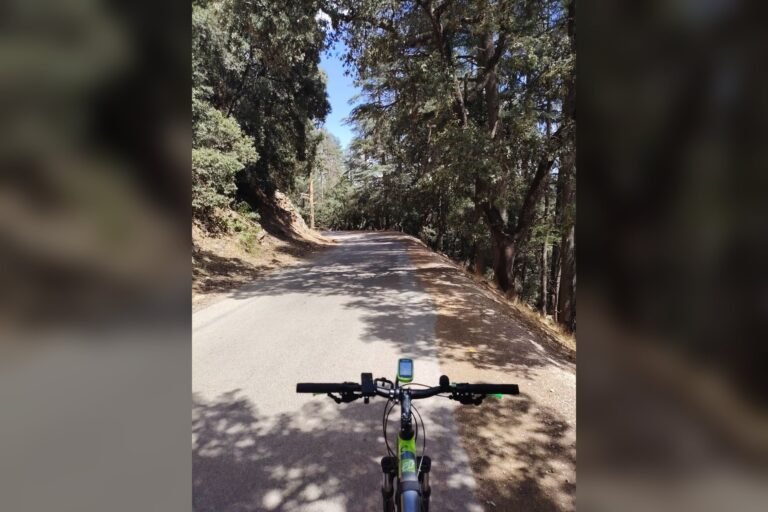
Meknes to Ifrane
A long climb into the Middle Atlas, through the cedar forest at Ras El Ma.
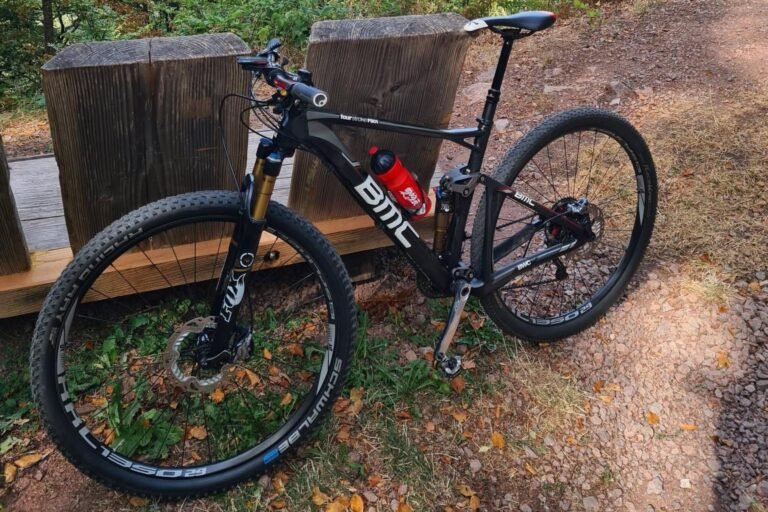
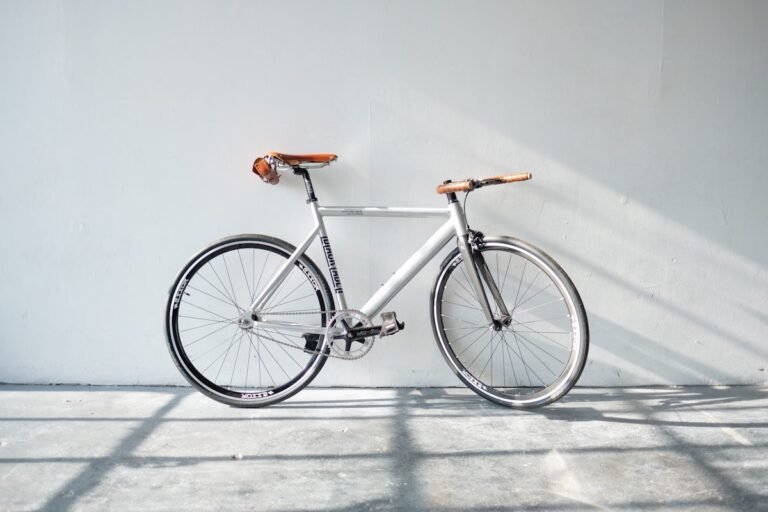
Fit & Comfort
Saddle height, saddle choice, and what five hours on a bike teaches you.
Gears not shifting cleanly?
The maintenance guide has the barrel-adjuster fix that solves nine out of ten shifting problems.