Cleaning a bike that rides through dust
Cleaning is maintenance, not vanity. Grit is abrasive, and a drivetrain left dirty grinds itself away far faster than one that gets ten minutes of attention.
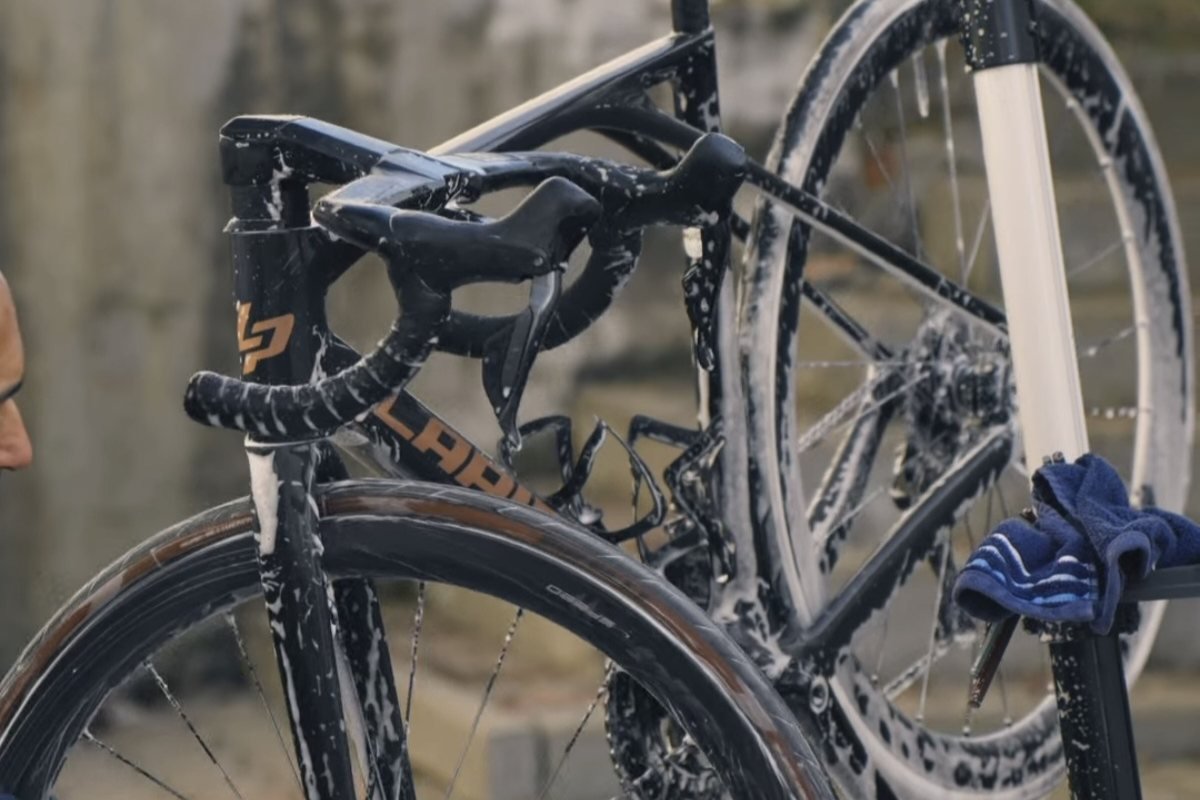
When I actually wash the bike
Not on a schedule. On what the ride did to it.
The ride decides, not the calendar
Most cleaning advice gives you an interval – once a week, once a month. That is not how I decide, and in a dry dusty place I do not think it is the right way to decide.
- I wash the bike when I have been on roads or tracks with dust and sand. That is the trigger. The bike tells me by what it has been through, not by what day it is.
- A ride on clean tarmac often needs nothing at all. A dusty ride needs washing whether it happened yesterday or a week ago.
- Leaving dust on is what actually costs you. It works into the chain and turns the oil into a grinding paste, which is a slow expense rather than a dramatic one.
Use the intervals below as a starting point if you like a routine. But if you ride somewhere dusty, judging by the ride you just did will keep the bike in better condition than any weekly habit.
A clean bike lasts longer, shifts better and is far more pleasant to work on. It also lets you spot problems — a cracked sidewall, a frayed cable, a hairline crack — that stay invisible under a layer of road grime.
But cleaning done badly causes damage. High-pressure water forced into hubs, bottom brackets and headsets washes grease out of bearings that were never designed to be waterproof. Almost every “my bearings failed early” story starts with a pressure washer.
Never use a pressure washer on a bicycle. It drives water past every bearing seal on the bike. A bucket, a hose on gentle flow, or a watering can is all you need.
What you actually need
- A bucket of warm water with a little washing-up liquid
- A soft brush for the frame and a stiffer one for the drivetrain
- A sponge or wash mitt
- Degreaser — a proper bike degreaser, or citrus-based cleaner
- Old rags, more than you think
- Chain lubricant to re-apply afterwards
You do not need a specialist bike wash. Washing-up liquid is mildly stripping, which is why you should keep it off the chain and re-lubricate afterwards, but on frames and wheels it is perfectly good.
The routine, in order
Order matters. Work from dirtiest to cleanest and you will not spread drivetrain grease over a frame you have already washed.
Rinse loose dirt off first
A gentle hose or a jug of water. The aim is to float off grit before you touch the paint with a sponge, because dragging grit across paint is how bikes get swirled and scratched.
Degrease the drivetrain
Apply degreaser to chain, cassette, chainrings and derailleur jockey wheels. Let it sit for a few minutes. Work it in with a stiff brush, backpedalling the chain through the bristles.
Scrub the cassette and rings
A narrow brush or a rag pulled between the sprockets clears the packed black paste that builds up between them. This is the single dirtiest part of any bike.
Wash the frame top down
Soapy water and a soft brush or sponge, starting at the bars and saddle and working down. Bottom bracket and chainstays last — they are always dirtiest.
Do the wheels and brakes
Both sides of the rims, between the spokes, and the brake calipers. On disc brakes keep degreaser well away from rotors and pads.
Rinse gently and dry
Low pressure only, and never aimed straight at hubs, headset or bottom bracket. Dry with rags, then let the bike stand for a few minutes so water drains out of the frame.
Re-lubricate the chain
This is not optional. You have just stripped the chain bare. One drop per link, spin the cranks, leave it a few minutes, then wipe all excess off the outside.
Lubricant goes inside the chain, not on it. The oil needs to reach the rollers and pins. Anything left on the outer plates only collects grit and turns into grinding paste. Wipe the chain until it looks almost dry.
Disc brakes need special care
Disc rotors and pads are ruined by oil and degreaser. Contamination causes squealing and a dramatic loss of braking power, and contaminated pads usually cannot be saved.
- Keep degreaser and chain lube away from rotors entirely
- Clean rotors with isopropyl alcohol and a clean rag, nothing else
- Never touch the braking surface with bare fingers — skin oil is enough
- If you must spray anything near them, remove the wheel first
How often?
| Conditions | Full clean | Chain wipe and re-lube |
|---|---|---|
| Dry summer riding | Monthly | Every 2 weeks |
| Mixed / typical | Every 2 weeks | Weekly |
| Wet winter or salted roads | Weekly | After every wet ride |
| Off-road / muddy | After every muddy ride | After every muddy ride |
The single highest-value habit is not the full wash — it is wiping and re-lubricating the chain. Five minutes a week does more for drivetrain life than an hour of scrubbing once a season.
Common cleaning questions
Yes, it is mild and fine on frames. Avoid anything containing wax on braking surfaces.
Mostly it just encourages surface rust on the chain and exposed steel. Dry the chain and re-lube it and you avoid almost all of the harm.
You do not need to. A chain-cleaning device that clips over the chain, or simply a brush and degreaser, gets it clean enough. Removing and refitting a chain repeatedly wears the joining link.
Rinse salt off as soon as you can — salt keeps corroding long after the bike looks dry. Pay attention to the underside of the bottom bracket, where salty water collects.
Related guides
Three more that pair naturally with this one.

Cleaning is half of maintenance
The maintenance guide covers the other half — brakes, gears, bearings and a full seasonal schedule.