Winter riding, and choosing your days
Winter stops more people cycling than any other factor, and almost all of it comes down to three solvable problems: being cold, being wet, and being invisible.
How I handle winter
Riding through the weather is one approach. Choosing around it is another.
Dress for the wind, skip the rain
Most winter cycling advice assumes you have no choice about the weather — commuting, a fixed schedule, riding through whatever the morning gives you. My winters do not work that way, and if yours do not either, the calculation changes.
- I have clothing specifically for winter, and specifically for wind. Wind is what decides whether a cold ride is bearable — far more than the number on a thermometer does.
- I avoid the days it rains. Not because riding in rain is impossible, but because I ride for the riding. A wet day is simply not the day I go out.
- Choosing the day skips an entire category of equipment. Mudguards, waterproof layers and wet-weather braking all matter enormously if you must ride regardless — and not at all if you can wait.
If you commute, ignore this: you do not get to pick the weather, and the wet-weather guidance below is written for exactly your situation. If you ride for pleasure, picking the day is the cheapest and most effective winter equipment there is.
Riding through winter is far more pleasant than it looks from indoors in November. The riders who manage it are not tougher — they have simply solved the equipment problems, and those solutions are neither complicated nor expensive.
Layering: dress to start slightly cold
The universal beginner mistake is dressing for the temperature standing still. Five minutes in you are too warm, you sweat, and then that damp layer makes you genuinely cold for the rest of the ride.
- Base layer — the important one. Merino or synthetic, never cotton. Cotton holds sweat against your skin.
- Mid layer — a long-sleeve jersey or light fleece for warmth.
- Outer layer — windproof first, waterproof if it is actually raining. Wind chill does more damage than air temperature.
- If you feel comfortable before setting off, you are overdressed.
Extremities first
Hands, feet and ears get cold long before your torso does, and cold hands are genuinely dangerous because braking and shifting get harder.
| Temperature | Hands | Feet | Head |
|---|---|---|---|
| 10–15°C | Long fingerless or light gloves | Normal socks | Nothing |
| 5–10°C | Full-finger gloves | Thicker socks | Headband or ear covers |
| 0–5°C | Insulated winter gloves | Overshoes + wool socks | Thermal skull cap |
| Below 0°C | Lobster mitts or two pairs | Winter boots or double overshoes | Full skull cap + neck buff |
Bar mitts are the unglamorous winning answer. They look ridiculous and outperform every glove. They stay on the bars, so you can ride in thin gloves and still have working fingers at the end.
Being seen
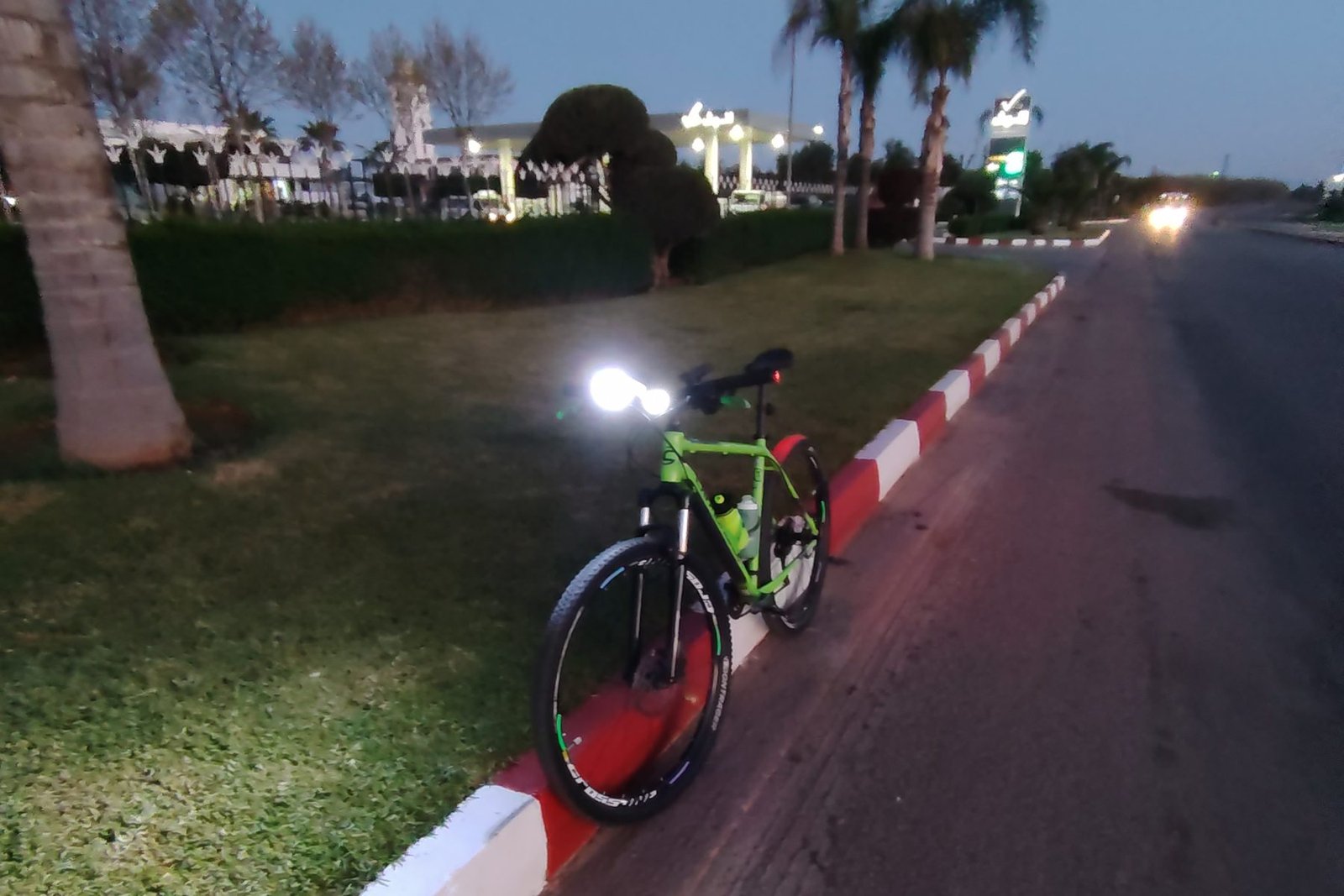
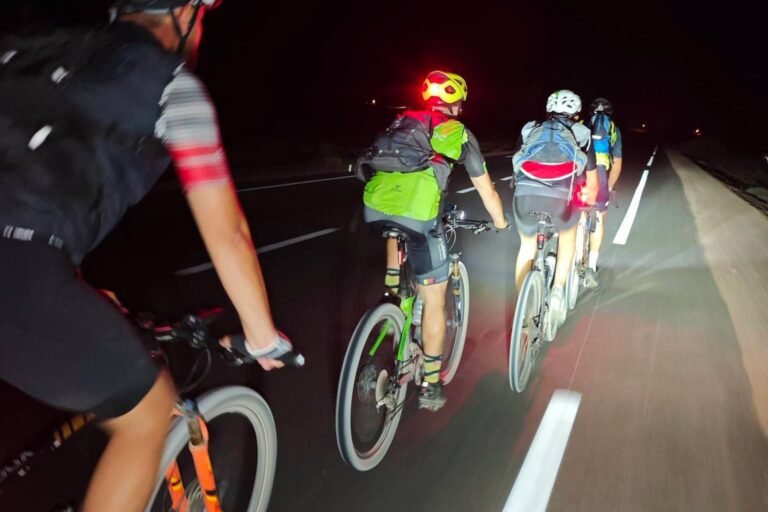
Winter means riding in the dark at both ends of the day, often in rain that reduces driver visibility further. This is where the most safety benefit per pound spent sits.
- White front and red rear lights are a legal requirement in most countries after dark
- Run one steady and one flashing light at each end if you can — steady lets drivers judge distance, flashing draws the eye
- On unlit roads you need a light bright enough to see by, not just be seen by
- Reflective material on ankles and heels beats anything static — moving reflectors read unmistakably as a person
- Fluorescent works in daylight and dusk but does almost nothing at night; reflective is what matters after dark
- Carry a spare rear light. Rear light failure is the one you will not notice.
The bike in winter
Salt is the real enemy, not cold. Salted roads corrode drivetrains, cables and any exposed steel remarkably fast, and it continues long after the bike looks dry.
- Fit mudguards. More winter comfort per pound than anything else, and they keep spray off your drivetrain as well as your back.
- Switch to a wet-weather chain lube — it stays put in rain, though it attracts more grit
- Rinse salt off after wet rides; a bucket of water is enough
- Wider tyres at slightly lower pressure give useful extra grip
- Check brake pads more often — wet grit wears them dramatically faster
- Expect to replace cables more often, or fit sealed ones
Ice: the one thing to take seriously
Cold rain, wind and dark are all manageable. Ice is different, because a bicycle gives you no warning and no recovery once a wheel loses grip on it.
- Assume any shaded patch is icy, even when the rest of the road is clear
- Bridges, underpasses and exposed sections freeze first and thaw last
- Black ice is genuinely invisible — judge by temperature and conditions, not by looking
- Ride in a straight line, brake in a straight line, and avoid any sudden input
- Lower your tyre pressure a little for a larger contact patch
- Studded winter tyres exist and work extremely well if you ride regularly in freezing conditions
- On a genuinely icy morning, not riding is a legitimate decision
Do not brake or steer at the same time on ice. Get your braking done in a straight line before the corner. Any combination of leaning and braking on ice ends the same way.
Three habits that save your bike
Charge lights weekly
Pick a day and charge everything. Most modern lights fade suddenly rather than gradually, so "it was fine yesterday" means nothing.
Dry the chain, always
Two minutes with a rag and fresh lube after a wet ride prevents most winter drivetrain damage.
Store it somewhere dry
A bike left wet in an unheated shed corrodes faster than one ridden daily and brought inside.
Common winter riding questions
Not in itself — bikes are designed for it. The damage comes from leaving it wet and salty afterwards. Rinse, dry the chain, re-lube.
With the right clothing most people are comfortable well below freezing. Ice, not temperature, is the thing that should stop you.
Many regular riders do — an older bike with mudguards and cheap components, keeping the good bike out of the salt. Not necessary, but it saves money over several winters.
Yes, though they are noisy and slow on clear roads. If you ride daily through a real winter they are transformative on icy mornings.
Anti-fog treatment, or simply ride with them slightly down your nose so air moves behind the lens. Fogged glasses at night are more dangerous than no glasses.
Related guides
Three more that pair naturally with this one.
Meknes to Ifrane
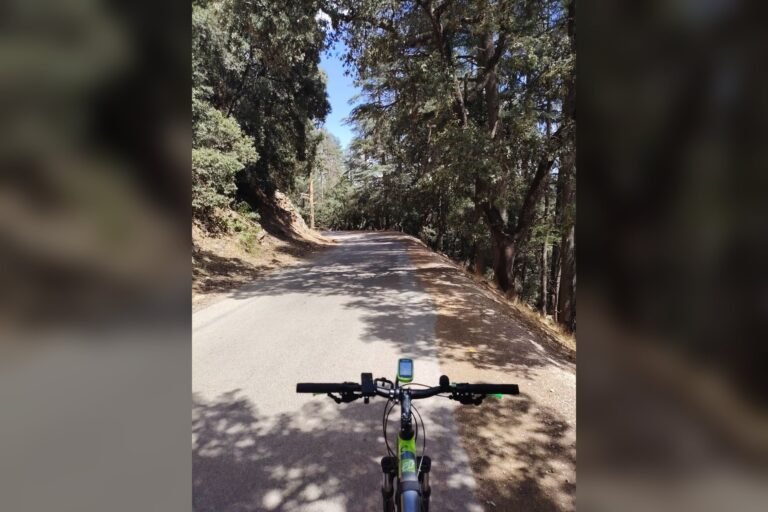
A long climb into the Middle Atlas, through the cedar forest at Ras El Ma.
Winter is hard on drivetrains
The cleaning guide has a full routine, and the maintenance schedule tells you what to check and when.