Food and water on a long ride in heat
Most riders eat too little too late. The fix is simple, cheap, and does not require anything from a sports nutrition shop.
Water, in a hot country
General rules get you close. Local conditions decide the rest.
How I handle water riding here
The advice further down is what works generally. This is what it looks like on my own rides around Fes and Meknes, where the summer heat sets the terms.
- I start early. In summer the heat decides the ride long before my legs do, so a first-light start is the difference between a good ride and a short one.
- I carry two litres. That is more than the bottle-an-hour rule suggests, and in this heat it is the right amount rather than a precaution.
- I refill at springs whenever I pass one, not when a bottle runs low. There are enough of them on the roads here to plan around, and passing one with half-empty bottles is a mistake you only make once.
If you ride somewhere cooler, the general guidance is the better guide. If you ride somewhere hot, plan the refills before you plan the food.
General information, not personal advice. This describes what works for most healthy adults on ordinary rides. If you have diabetes, a heart condition, an eating disorder, or you are pregnant, take advice from a medical professional who knows your situation rather than from a cycling website.
Nutrition for cycling gets presented as complicated because there is an industry selling into it. For the rides most people actually do, it is not complicated at all.
It depends almost entirely on how long you ride
| Ride length | Food | Drink |
|---|---|---|
| Under 60 minutes | Nothing needed | Water — one bottle at most |
| 1 to 2 hours | Optional; something small if you are hungry | One bottle, sipped throughout |
| 2 to 3 hours | 30–60g of carbohydrate per hour after the first hour | One bottle per hour, more in heat |
| 3 hours or more | 60g+ per hour, from mixed sources | One bottle per hour plus electrolytes |
| All day | Eat properly at stops, not just snacks | Plan refill points before you leave |
The single most common mistake is eating nothing on a three-hour ride because it felt fine for the first hour. By the time you are hungry it is already too late.
What the bonk actually is
Your body stores carbohydrate as glycogen in the muscles and liver — enough for roughly 90 minutes to two hours of moderate riding. When that runs out, power drops sharply, thinking becomes foggy, and everything feels disproportionately hard. Riders call it bonking or hitting the wall.
It is unpleasant, it ruins rides, and it is almost entirely avoidable. Recovery takes 20 to 30 minutes even after eating, because the food has to be digested and absorbed. Prevention is the whole game.
Start eating before you feel hungry. On any ride over two hours, eat something small at around the 45 to 60 minute mark and keep going at regular intervals. Waiting until you want food means you are already behind.
What to eat
On the bike you want carbohydrate that digests easily. Fat, protein and fibre are all useful in a diet and all unhelpful mid-ride, because they slow digestion at the moment you need it fastest.
Ordinary food works
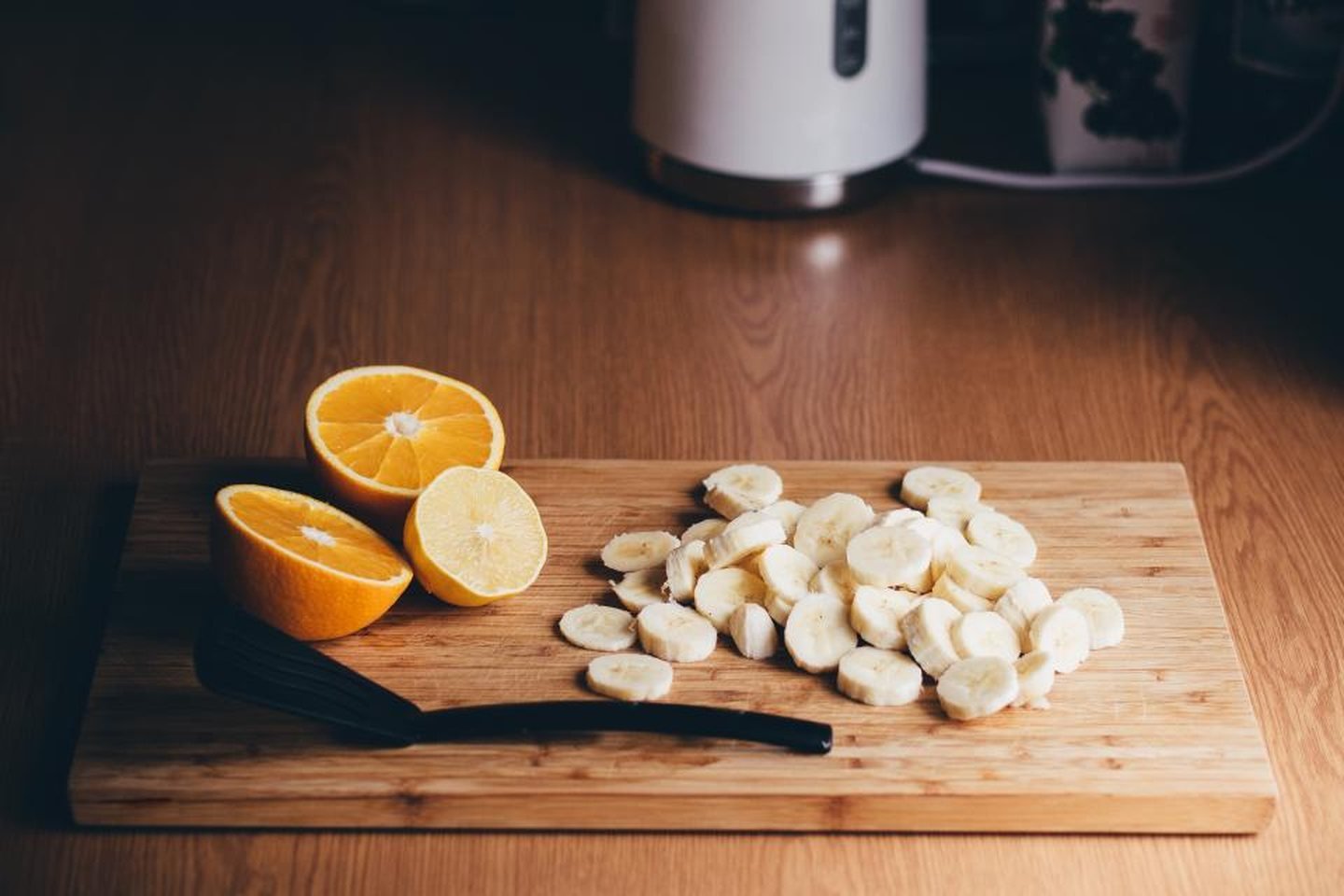
- Bananas — the classic for good reason, roughly 25g of carbohydrate each
- Malt loaf, fruit cake, flapjack — dense, cheap and easy to eat
- Jam or honey sandwich on white bread — unglamorous and extremely effective
- Dried fruit, dates and raisins — compact and easy to pocket
- Rice cakes or small pastries — the staple of professional teams for decades
When gels and sports products help
Energy gels are convenient, fast and easy to carry — genuinely useful on hard rides, races, or when you cannot stop. They are also expensive and unnecessary for a Sunday ride. Buy them for the situations that need them rather than as a default.
Drinking
Roughly 500 to 750ml per hour is a reasonable starting point, going higher in heat and lower in cold. Sip regularly rather than drinking a lot at once — small amounts absorb better and sit more comfortably.
- Thirst is a reasonable guide on shorter rides
- On rides over two hours, or in heat, drink to a schedule rather than to thirst
- Dark urine after a ride suggests you were behind on fluid
- In cold weather you still sweat and still need to drink — most riders under-drink in winter
Do you need electrolytes?
For rides under about 90 minutes, water is fine. On longer rides, in heat, or if you are someone who finishes rides with salt crusted on your face, electrolyte tablets in one bottle help replace what you lose in sweat and encourage you to keep drinking.
Do not drink enormous amounts of plain water on very long rides. Overdrinking without replacing salt can dilute sodium in the blood, which is dangerous. This is rare, but it is worth knowing that more is not automatically better.
Before and after
Before
Eat a normal meal containing carbohydrate two to three hours before a long ride. If you are riding within an hour of waking, something small and easy — a banana, toast with jam — is better than nothing. For an easy hour, riding before breakfast is perfectly fine.
After
Eat a proper meal with both carbohydrate and protein within a couple of hours of finishing. The precise timing matters far less than people claim; what matters is that you eat enough, especially if you are riding again the next day.
A simple approach that works
Under an hour
Water. Nothing else needed.
One to two hours
One bottle. Take something small in a pocket in case.
Two to three hours
A bottle per hour. Eat something at 45 minutes and every 45 minutes after.
Over three hours
Two things to eat per hour, electrolytes in one bottle, and a planned stop to refill.
Test everything on training rides, never for the first time on an important one. Stomachs are individual, and the ride where you discover a product disagrees with you should not be the one that matters.
New to longer rides? The first 30 days guide covers building distance sensibly, and the fit and comfort guide deals with the aches that show up as rides get longer.
Three things that prevent most bad rides
Eat before you are hungry
On rides over two hours, start eating at 45 minutes. Hunger is a late signal and recovery from a bonk takes half an hour.
Real food is enough
Bananas, malt loaf and jam sandwiches have fuelled riders for a century. Gels are for when convenience genuinely matters.
Sip to a schedule
One bottle an hour, more in heat. Thirst lags behind need once rides get long.
Questions people ask about fuelling rides
For an easy ride of an hour or less, it is fine and many riders prefer it. For anything longer or harder, eat something first — riding hard on empty tends to produce a poor session rather than a beneficial one.
One standard bottle per hour of riding as a starting point, adjusted up in heat. If your route has no refill points, plan for the whole ride before you leave.
Not for ordinary rides. They are convenient for hard efforts, racing or long days when stopping is inconvenient. For most riding, food and water do the same job for far less money.
Honestly, it is not fully settled. Dehydration, electrolyte loss and riding harder or longer than you are trained for are all associated with it. Building up gradually and drinking properly helps most people.
It can contribute, but this guide is about fuelling rides, not weight management — and advice on that is worth getting from a professional who knows your health history rather than from a cycling site.
A large meal immediately before riding is usually uncomfortable. Something small ten to fifteen minutes before is generally fine. Two to three hours is the comfortable window for a full meal.
Related guides
Three more that pair naturally with this one.
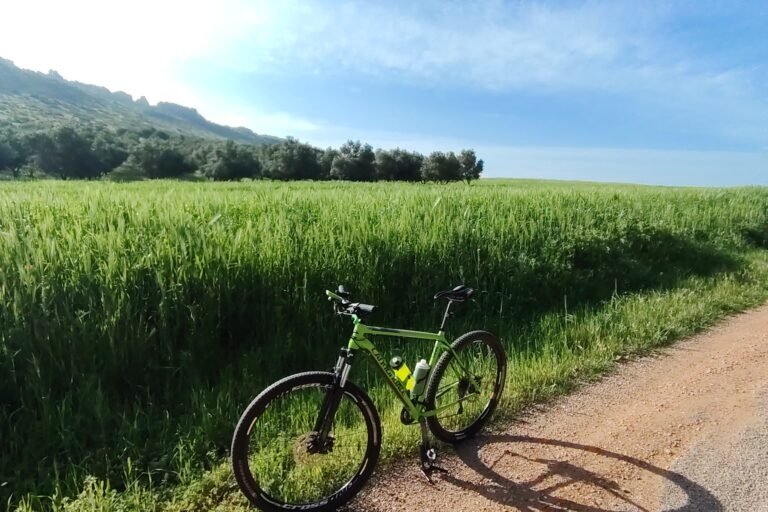
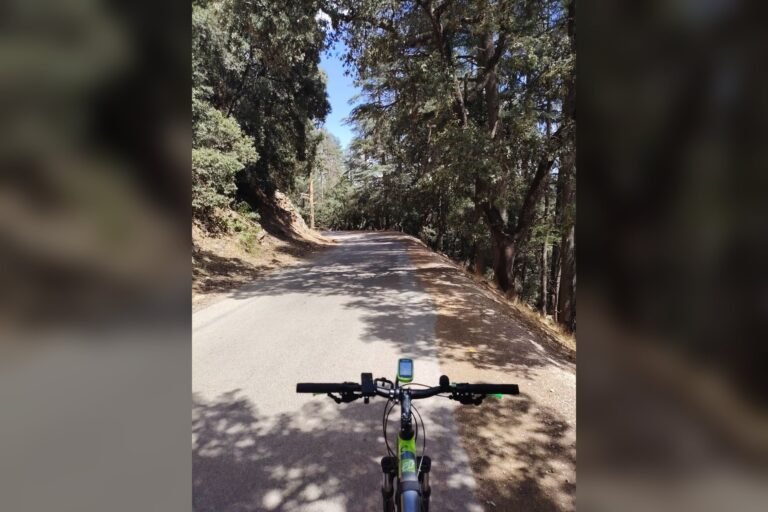
Meknes to Ifrane
A long climb into the Middle Atlas, through the cedar forest at Ras El Ma.
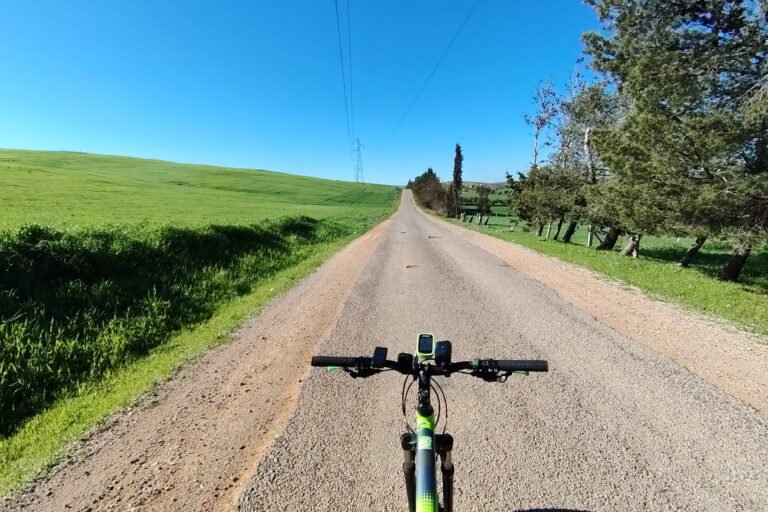
Cycling in Morocco
Roads, drivers, water, heat and shops – what riding here is actually like.
Building up to longer rides?
The first 30 days guide sets out a realistic four-week plan for getting comfortable on a bike.