Riding a bike while fasting
Two windows work: about an hour before iftar, or two hours after Tarawih. Neither is the ride you do the rest of the year, and that is fine.
How I ride in Ramadan
Two windows, and a hard limit on each.
An hour before iftar, or two hours after Tarawih
Ramadan changes when you ride and how long for. This is what I actually do, rather than what a training plan would tell you.
- Before iftar I ride for about an hour, and I finish roughly thirty minutes before the adhan. That half hour is for a shower, so I am home and ready when it is time to eat.
- I do not go longer than an hour, because you cannot drink. I lose a lot of water on a ride, and an hour is where I stop.
- The other option is night. After Tarawih I go out and ride about two hours - by then I have eaten and had water, so a longer ride is reasonable.
- Two hours is my maximum at night as well. Ramadan is not the month for a personal best.
Both are shorter than my normal ride, and that is the honest summary: in Ramadan you keep the habit. You do not build fitness.
Fasting does not stop you riding. It changes two things: when you can go, and how long you can stay out. Everything else follows from those.
Why an hour is the limit before iftar
The constraint is not your legs, it is water. On a normal ride you drink as you go and barely think about it. Fasting, you cannot, so whatever you lose stays lost until the adhan.
That is why the ride before iftar is short and easy rather than short and hard. A hard hour costs far more water than an easy one, and you have no way to put it back.
The thirty-minute buffer
Finishing half an hour before the adhan is not only about having time to shower. It is insurance. A puncture twenty minutes from home is a minor annoyance on a normal day; the same puncture fifteen minutes before iftar is not. Leave yourself the margin.
The night ride
After Tarawih is the better window if you want a real ride. You have eaten, you have had water, the temperature has dropped and the roads are quiet.
Two things change at night. You need proper lights and something reflective, because you will be out in full dark. And you should still keep a ceiling on it – two hours is plenty when you will be up early again.
What to expect from yourself
- Ride easier than you think you should, in both windows.
- Drink properly between iftar and sleep, not all at once.
- Skip the ride entirely on a day when you feel wrong. Nothing is lost by missing one.
- Judge the month by whether you kept riding at all, not by speed or distance.
This is what works for me. Fasting affects people differently, and if you have a medical condition or you are unsure, ask someone qualified rather than taking a cycling site’s word for it.
When a ride actually fits
Both are shorter than a normal ride. That is the point.
Before iftar
About one hour
- You cannot drink, so the clock is set by water, not by legs.
- Finish about thirty minutes before the adhan.
- Easy pace only. This is not the ride to push.
- If Ramadan falls in summer, this is also the hottest part of the day - plan for that, or use the night instead.
After Tarawih
About two hours
- You have eaten and had water, so a longer ride is realistic.
- Two hours is still a sensible ceiling.
- You need lights and you need to be seen - it is properly dark by then.
- Roads are quieter, and the temperature is finally reasonable.
Questions people ask
Related guides
Three more that pair naturally with this one.
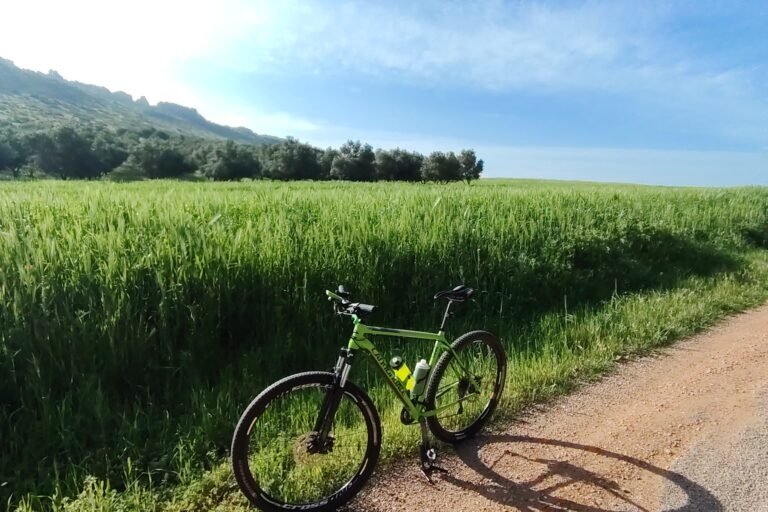
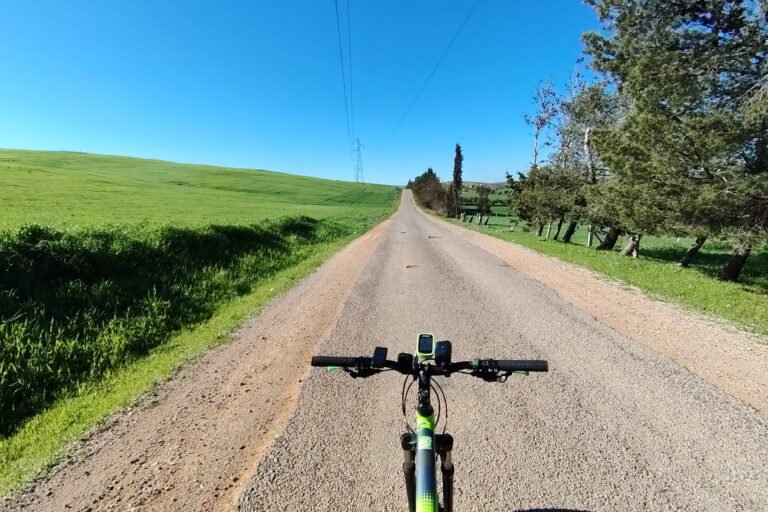
Cycling in Morocco
Roads, drivers, water, heat and shops – what riding here is actually like.
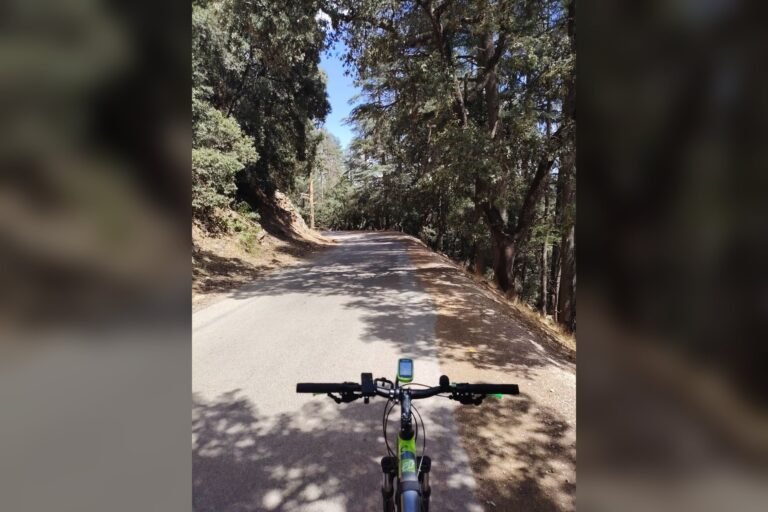
Meknes to Ifrane
A long climb into the Middle Atlas, through the cedar forest at Ras El Ma.
Riding in real heat
If Ramadan falls in summer where you are, the heat guide covers the part that matters most: water, timing, and knowing when to stop.