Meknes to Ifrane
One long climb off the plain into the Middle Atlas. The air gets cooler as you go, which in summer is the whole point.
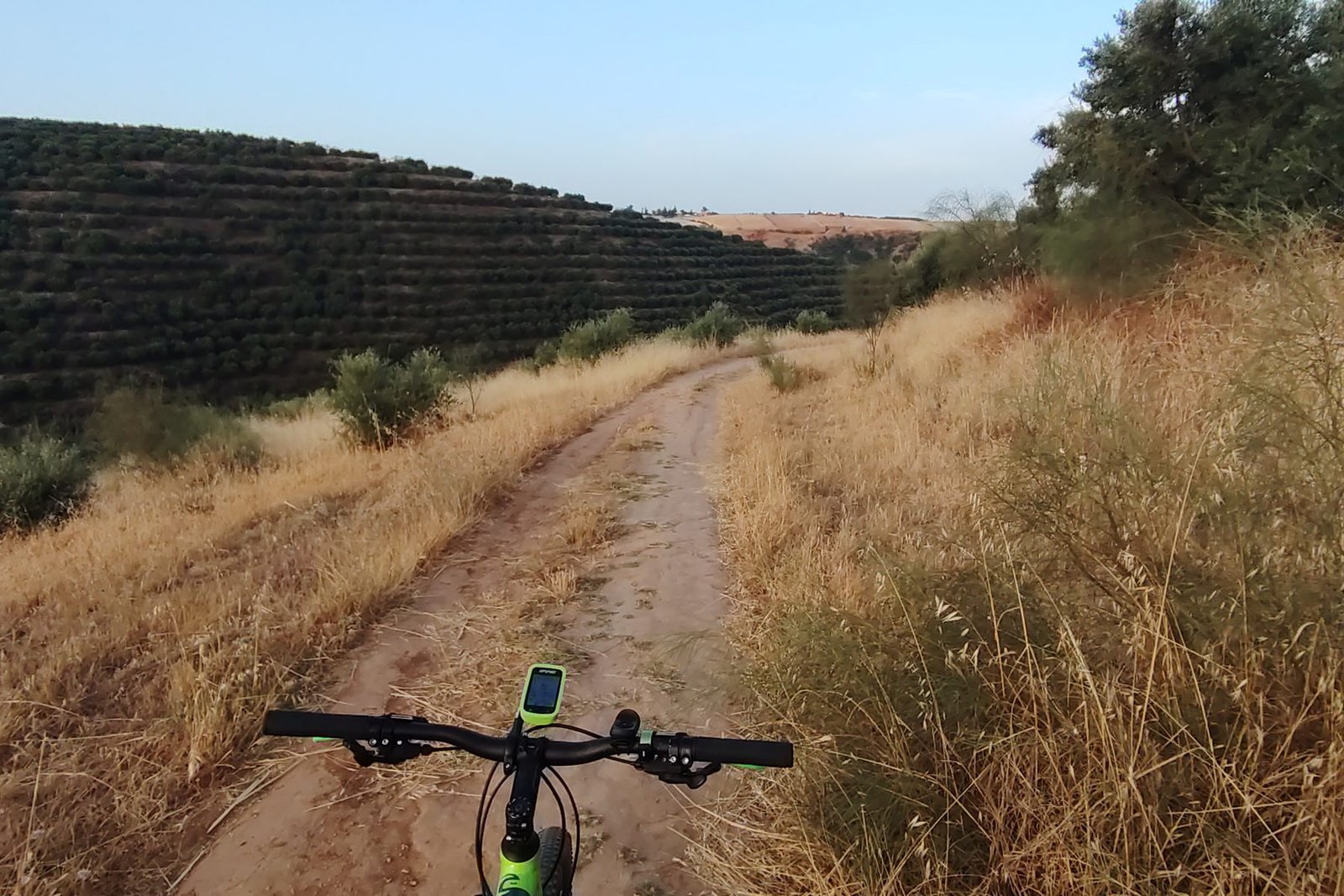
If you have a bike near Meknes and one good day to spend, this is the ride. It goes Meknes to El Hajeb, then Azrou, then Ifrane, and it takes you from farmland on the plain up into cedar forest at altitude.
The appeal is not just the scenery. Climbing here means climbing into cooler air, so a ride that would be punishing on the plain in summer becomes steadily more comfortable the higher you get.
This is a serious day out, not an afternoon spin. Treat it as a long ride: proper food, refills planned, and a decision made in advance about how you are getting home.
The shape of the ride
The route breaks naturally into three parts, and they feel completely different from one another.
1. Meknes to El Hajeb - leaving the plain
Open farmland, long straight stretches, and the escarpment ahead of you the whole way. This is the exposed part. There are trees along the road, but they are a line beside you rather than cover over you, so you ride it in full sun – in summer this is the section that punishes a late start. The climbing begins gently and then steepens as you approach El Hajeb, which sits up on the edge of the plateau.
2. El Hajeb to Azrou - onto the plateau
Above El Hajeb the landscape changes. You are on higher ground, the air is noticeably fresher, and trees start to appear. The gradient is more forgiving than the escarpment behind you, but you are climbing steadily the whole way.
3. Azrou to Ifrane - the cedar forest
The best part. Azrou sits among cedar forest, and the road up to Ifrane runs through it. It is cool, green and completely unlike where you started a few hours earlier. Ifrane itself is the highest point of the ride.
Check the numbers against your own map before you go. Roughly, this is a long day with well over a thousand metres of climbing from Meknes to Ifrane, but plan it with a route tool rather than trusting a figure in an article – including mine.
Water on this route
You pass through towns, which makes this easier than a remote route: El Hajeb and Azrou both give you shops and cafes, and there are springs along the way.
- Fill completely before leaving Meknes - the first section is the most exposed
- Top up in El Hajeb whether or not you feel you need it
- Azrou is the natural food stop, and the last comfortable one before Ifrane
- In summer, two litres between towns is a working minimum
Traffic
This is a main road and it carries real traffic, including lorries and coaches. It is entirely rideable, but it is not a quiet lane.
- Ride a predictable line and stay out of the gutter, where the debris is
- A daylight rear light matters more here than on a quiet road
- Expect the mix described in the Morocco guide: many drivers give room, some do not
- On the descent you will be moving quickly - hold your line and brake early
Getting back
Decide this before you start, because it changes the whole day. I ride back, because the descent and the views on the way down are half the point of going up.
| Option | What it means |
|---|---|
| Ride back the way you came | What I do. The descent is fast and the views coming down are the reason to ride it – but you drop back into the heat later in the day |
| One way, transport back | Ride up, return by bus or grand taxi. Check in advance whether they will take the bike |
| Stay over | Ifrane and Azrou both have accommodation. This turns a hard day into a comfortable weekend |
What to bring
- Two bottles, filled, plus the plan for refills above
- Real food, not just gels - see the food and drink guide
- Spare tube, levers and a pump - the puncture guide covers the rest
- Cash for shops, cafes and possibly transport home
- A layer for the top - Ifrane is much cooler than Meknes, and it feels it when you stop
- Sun protection for the exposed first section
Cedar forest and macaques. The forest around Azrou and Ifrane is known for Barbary macaques. Do not feed them – it is bad for the animals and it teaches them to approach people, which does not end well for anyone.
Is it hard?
Honestly: yes, if you are new to riding. It is a long, sustained climb rather than a series of short hills, and the exposed early section in summer heat is what makes it demanding rather than the gradient itself.
It is very achievable if you have been riding regularly, take it steadily in a low gear, and plan the day around an early start. If you are still building up, the first 30 days plan is the place to start, and this route is a good goal to work towards.
Three things to plan before you go
Climb into cooler air
You gain over a thousand metres between the plain and Ifrane, and the temperature falls as you go. In summer that is the reason to do it.
Towns are your refills
El Hajeb and Azrou both have shops and cafes. Fill up at each one rather than pushing on.
Plan the way home first
Riding back means descending into the heat late in the day. Transport or an overnight stay changes the whole ride.
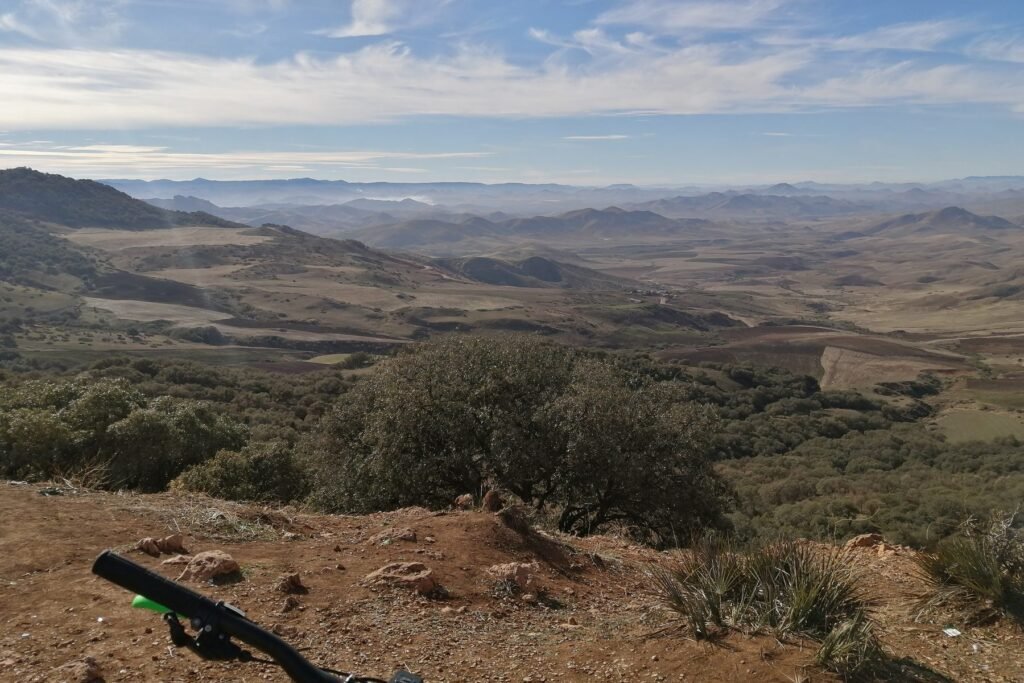
The view from the road between El Hajeb and Azrou. This is the part of the climb that pays you back – you have left the plain behind, the air is cooler, and the whole plateau opens out below the road.
The cedar forest between Azrou and Ifrane
The last stretch of the climb, and the reason to do it.
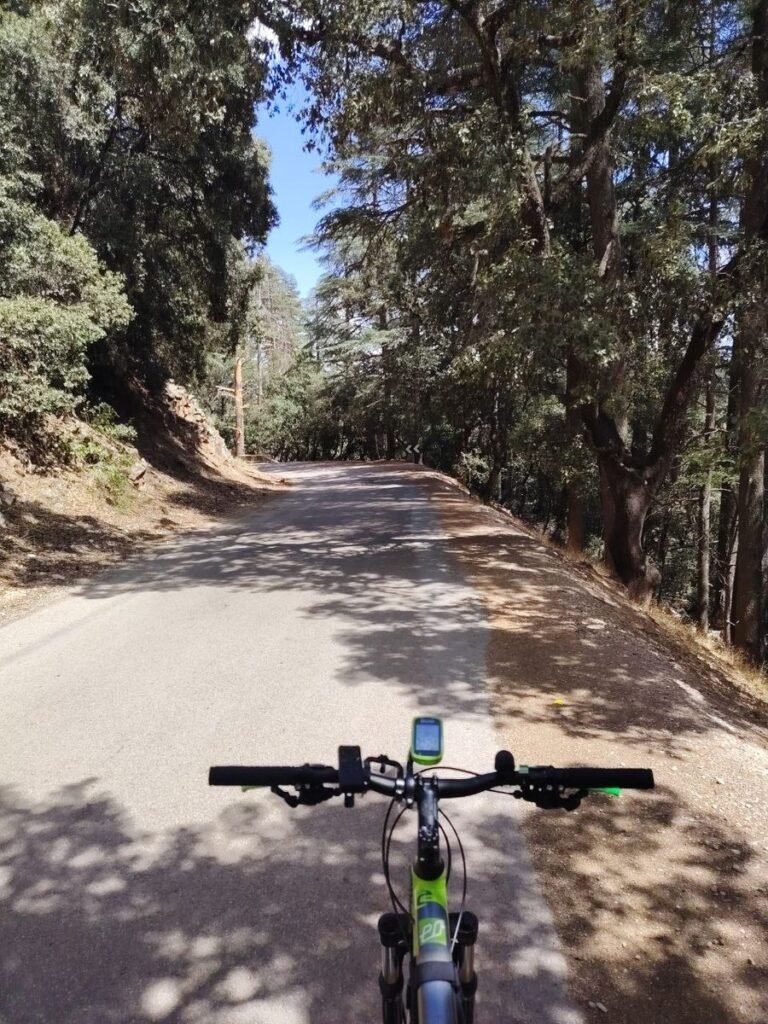
The road through the cedars. Shade most of the way, and quiet.
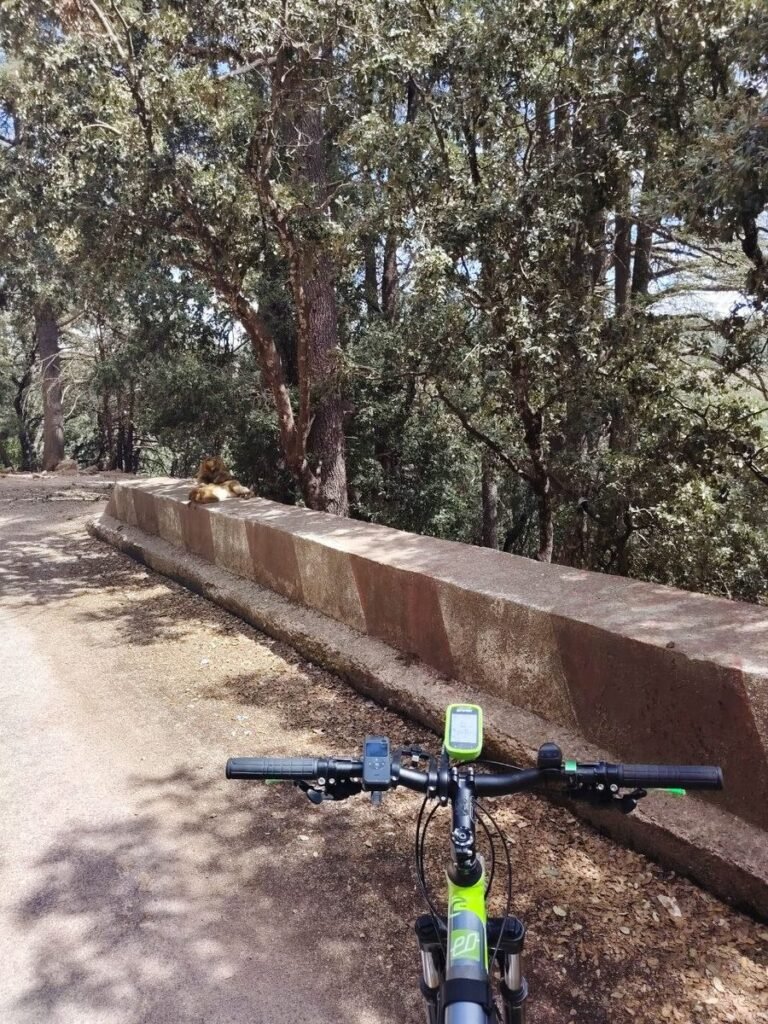
A Barbary macaque on the wall beside the road, watching me go past.
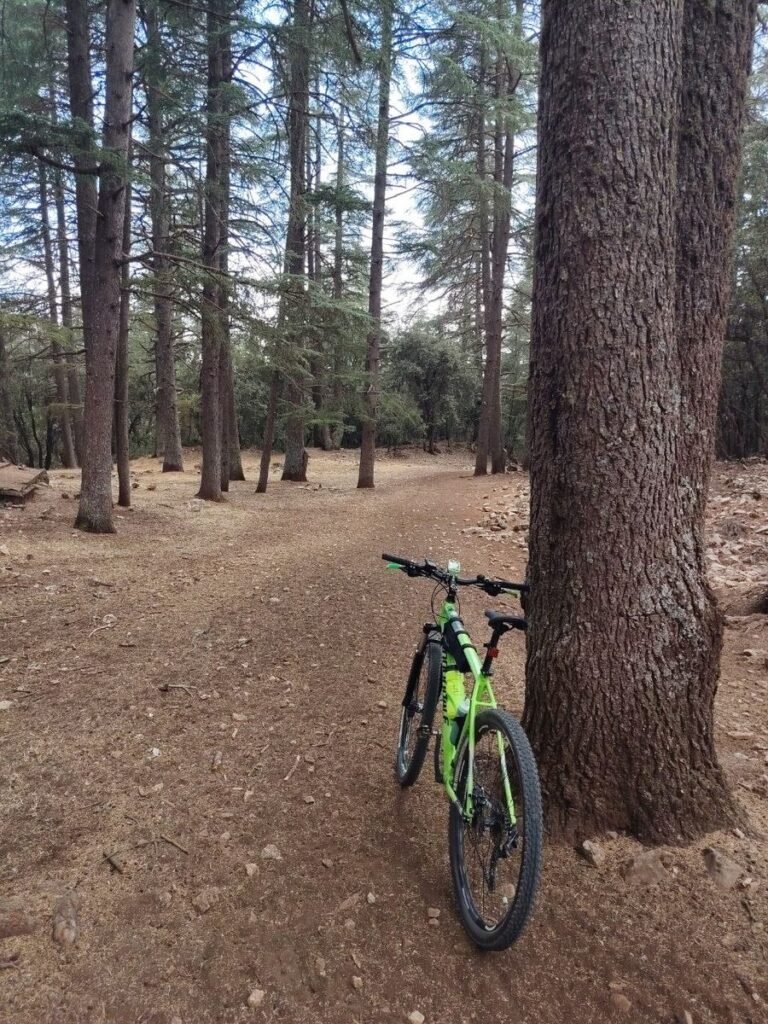
My bike against a cedar. That trunk gives you the scale of them.
Above Azrou the road climbs into the cedars, and the whole character of the ride changes. After a morning of open farmland and full sun, you are suddenly riding in shade on a quiet surfaced road with enormous trees on both sides. These photographs are from Ras El Ma, on the way up to Ifrane.
There are Barbary macaques in this forest. I passed the one in the middle photograph sitting on the wall at the side of the road, and it watched me go by without much interest. Give them room and keep riding – do not stop to feed them.
This is the part of the ride that makes the climb worth the effort, and it is the reason I ride back down rather than taking transport home.
Questions about this ride
About five hours of riding for me, plus stops. Plan it against your own pace with a route tool rather than trusting a single figure, and add time for the heat in summer.
Either works, since the route follows surfaced roads. A road bike is faster on the climb; a mountain bike is more comfortable if you plan to explore the forest tracks around Azrou.
I ride back rather than take transport, so I cannot vouch for it from experience. If you want to go one way, ask in advance whether the service will carry a bicycle rather than turning up and hoping.
Spring and autumn are ideal. Summer works with a first-light start. Winter can be genuinely cold and occasionally snowy at Ifrane, so check conditions.
Yes – El Hajeb and Azrou both have cafes and shops. Azrou is the natural lunch stop.
Fast and enjoyable, and it demands attention. Brake early, hold a predictable line, and remember your rims or rotors get hot on a long descent – see the brakes guide.
Related guides
Three more that pair naturally with this one.
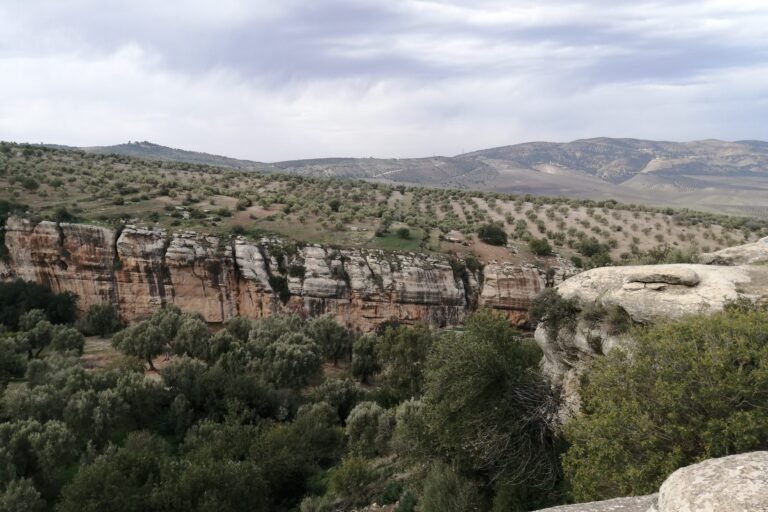
Meknes to Moulay Idriss
Ninety minutes each way, a cafe in the town and a spring above it.
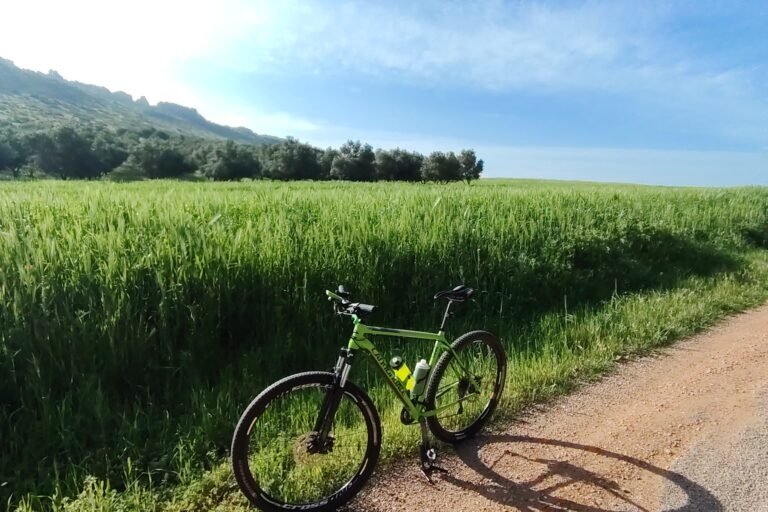
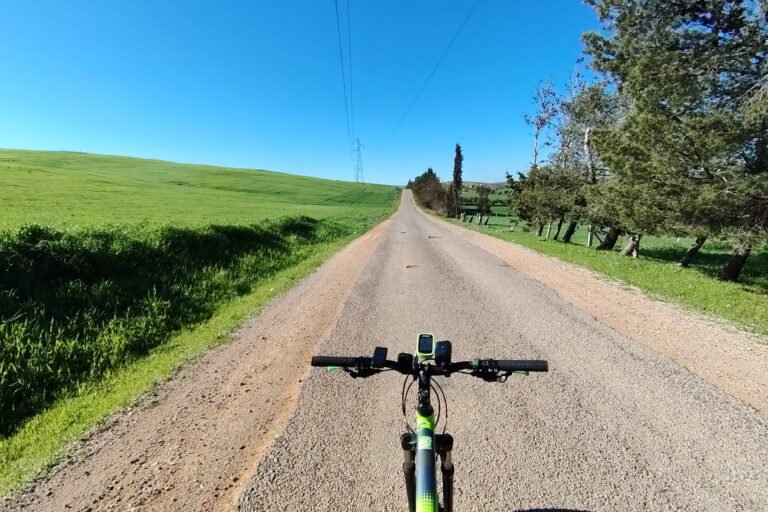
Cycling in Morocco
Roads, drivers, water, heat and shops – what riding here is actually like.
Riding in the heat
The heat guide covers early starts, water planning and the warning signs worth stopping for.