Cycling in Morocco
Most cycling advice online is written for European roads and European weather. Very little of it survives contact with a Moroccan summer.
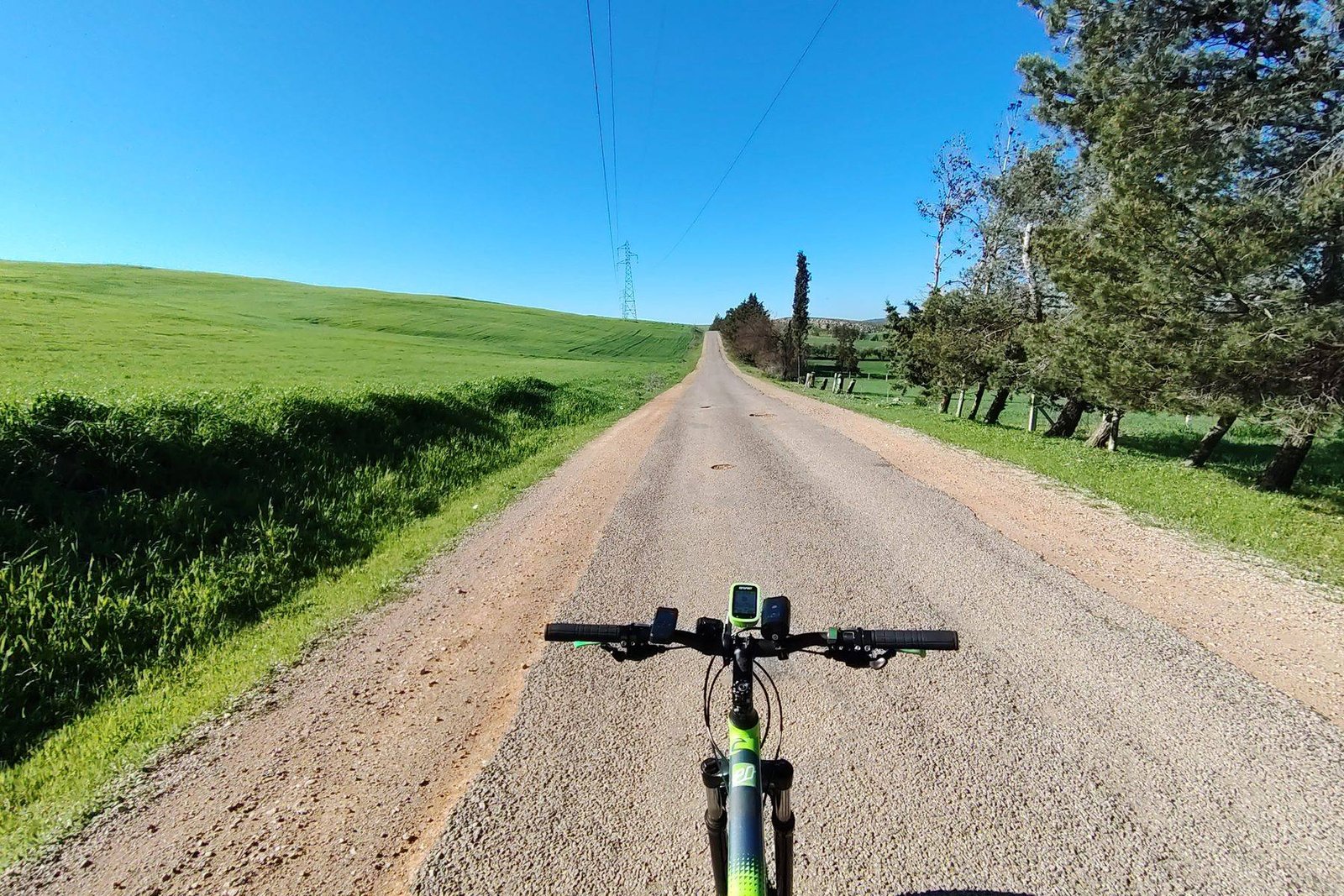
This site is written from the Fes and Meknes area, and this guide is the part that no guide written in Britain or Germany can tell you: what it is actually like to ride here.
Some of it is better than people expect. Some of it will catch you out.
Heat decides everything
In summer the temperature is not a detail to plan around, it is the thing that plans your day for you. The practical answer is simple and almost everyone here arrives at it: ride early in the morning.
Setting off at first light gives you cool air, empty roads and a few hours before the heat becomes the limiting factor. Riding at midday in July is not a test of fitness; it is a bad idea with predictable consequences.
Two litres is the working minimum for a summer ride here, and it is a starting point rather than a target. Plan where you will refill before you leave, not when you notice the bottles are light.
Water, and the springs
Carrying enough water for a long hot ride is not really possible – four or five litres is unmanageable on a bike. The way it works in practice is to carry two litres and top up along the way.
Roadside springs and fountains, the 3winat, are the usual answer. They are scattered along country roads and through villages, and locals use them constantly. Where you find one, fill both bottles even if they are only half empty. The next one may be much further than you expect.
- Fill up whenever you pass water, not when you are running low
- Ask locally if you are not sure - people will point you to the nearest one
- Carry a little cash: cafes and small shops in villages will fill bottles
- On a long summer ride, plan the route around water rather than distance
Road surfaces
Main roads are generally good tarmac and pleasant to ride. The edges are where the trouble is – the surface degrades at the margin, and the debris collects there.
Broken glass is the main cause of punctures here. It gathers at the roadside, exactly where a cyclist naturally rides. Two habits deal with most of it:
- Ride slightly further out from the edge than instinct suggests
- Check your tyres for embedded fragments after a ride, before they work through
The full repair procedure is in the puncture guide, and tyre choice and pressure in the tyres guide. Puncture-resistant tyres are worth more here than in places where the roads are swept.
Drivers
The honest picture is mixed, and it is worth saying plainly rather than pretending.
Many drivers are considerate: they wait, they pass wide, and they pull back in only once they are properly past. That is a large share of the traffic and it makes riding here perfectly reasonable.
Others pass far too close, sometimes at speed. You cannot control which kind is behind you, so ride so that a close pass is survivable rather than assuming it will not happen.
- Hold a predictable line. No sudden movements, no weaving around debris without looking
- Be visible. A rear light in daylight is one of the cheapest safety upgrades there is
- Do not ride in the gutter. Riding too far in invites drivers to squeeze past without moving out
- Watch for vehicles pulling back in early after overtaking - this is the pass that catches people out
- Let it go. A confrontation with a driver is a contest you cannot win on a bicycle
General road technique is covered in the skills and safety guide. Everything there applies; the difference here is that you should assume less about how much room you will be given.
Dogs
Village and farm dogs will bark and sometimes run at you. It is startling the first time and it is a normal part of riding rural roads here.
Most of it is territorial noise. The dog is seeing you off its patch, and it stops once you are past. Sprinting in panic is the wrong instinct – it triggers the chase and it puts you on a bike at speed while distracted.
What actually works is covered in detail in the guide to dogs on the road.
Bikes, parts and repairs
There are bike shops, though not on every corner, and for everyday needs they cover you: tubes, tyres, cables, chains, basic servicing. If you puncture or snap a cable you can usually sort it locally, though it may take trying more than one shop.
Specific components are harder – a particular groupset part, a size that is not common, anything higher-end. That is where ordering online from China becomes the practical route, at the cost of waiting weeks and accepting some risk about what arrives.
The parts guide covers which route to use for what, and what is worth keeping as a spare so a small failure does not end a month of riding.
Where to ride
The plains around Fes and Meknes give you long quiet roads through farmland – green in spring, hard and dry by midsummer. Head south and the land rises into the Middle Atlas, which is where the riding becomes genuinely special: cooler air, cedar forest, and a proper climb.
The Meknes to Ifrane route is the one to do first.
Three things that matter most here
Ride at first light
In summer the early morning is not a preference, it is the only sensible window. Cool air, empty roads, and the heat still hours away.
Two litres, then refill
Carry two and top up at every spring or shop you pass. Plan the route around water, not the other way round.
Assume nothing about drivers
Many give you room. Some do not. Ride a predictable line, stay out of the gutter, and use a daylight rear light.
Questions about cycling in Morocco
Spring and autumn are the most comfortable. Summer riding is entirely possible but belongs to the early morning. Winter is fine at lower altitude and genuinely cold up in the Middle Atlas.
Two litres as a minimum in summer, topped up whenever you pass a spring, cafe or shop. Distance matters less than where the water is.
Main roads are generally well surfaced. The risk is not the tarmac but the variability in how much room drivers give you. Ride predictably, stay visible, and do not hug the edge.
Broken glass at the roadside. Riding a little further out and checking your tyres afterwards prevents most of them.
Everyday consumables, yes, easily. Specific or higher-end components usually mean ordering online and waiting.
If you are visiting to ride, yes. Bring spares that are specific to your bike, because matching an unusual part locally is the hard case.
Related guides
Three more that pair naturally with this one.
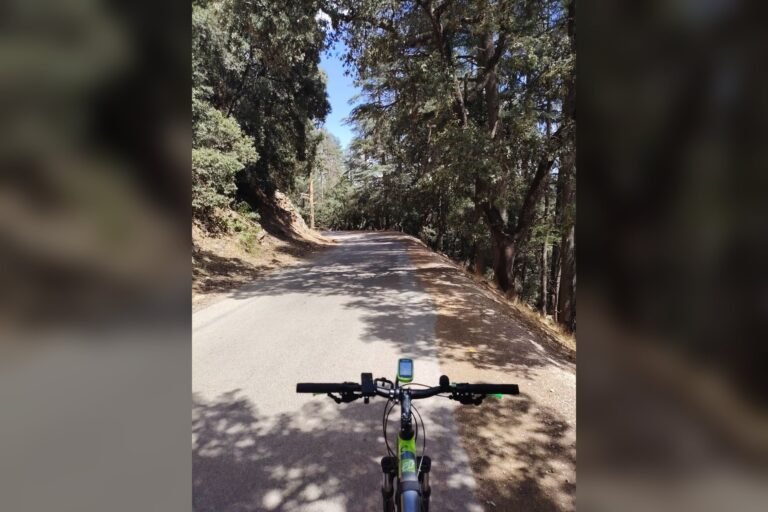
Meknes to Ifrane
A long climb into the Middle Atlas, through the cedar forest at Ras El Ma.
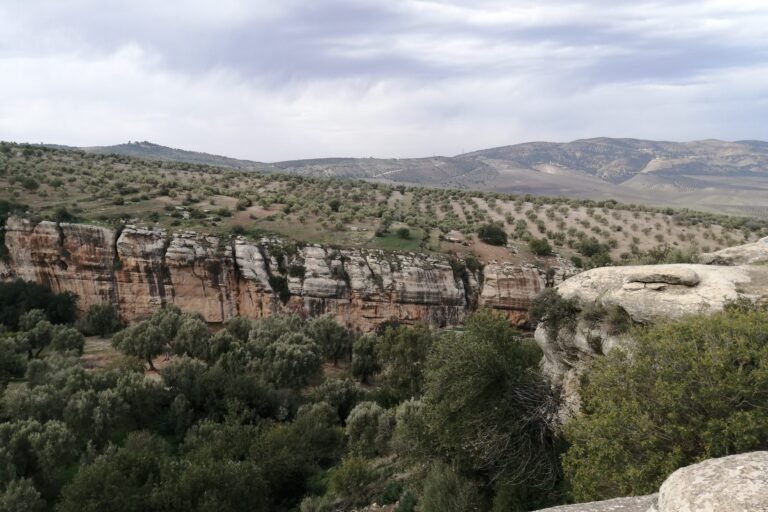
Meknes to Moulay Idriss
Ninety minutes each way, a cafe in the town and a spring above it.
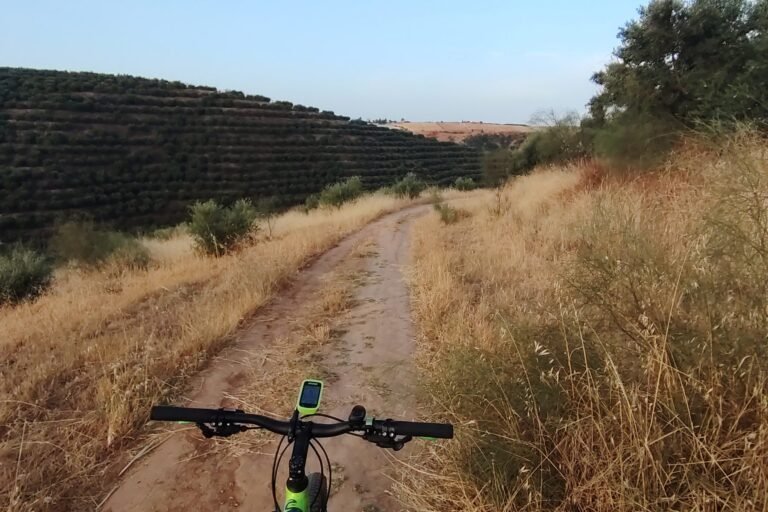
Cycling in Ramadan
The two windows that work while fasting – before iftar, or after Tarawih.
The ride worth planning a trip around
Meknes to Ifrane climbs off the plain into the cedar forests of the Middle Atlas.