Dogs on the road
Almost every rider who spends time on rural roads meets this. It is startling the first time, and it is more manageable than it feels.
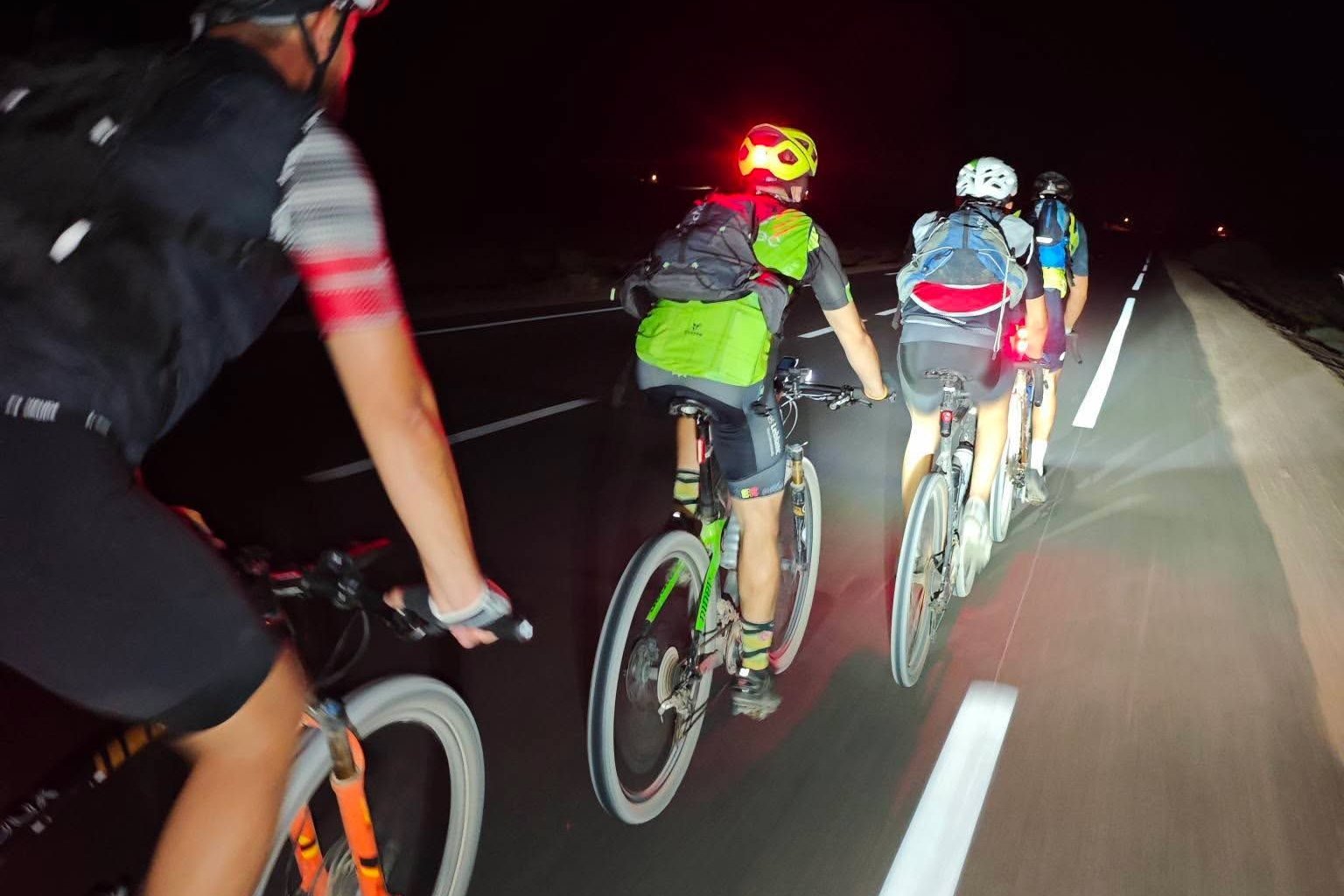
Ride country roads anywhere – here, southern Europe, rural America – and sooner or later a dog will come out barking. Village and farm dogs do it constantly.
Almost all of it is territorial. The dog has decided you are passing through its patch and it wants you gone. Once you are past the boundary it stops, usually as suddenly as it started.
Why dogs chase bikes
Two things make a cyclist more interesting than a pedestrian: speed and moving legs. Both trigger a chase instinct that walking past would not. The bike is not the target; the movement is.
That matters, because it tells you what to change. Take away the fast movement and most of the interest disappears.
What to do
Do not panic-sprint
The instinct is to accelerate away. Sometimes it works, and it is also how riders end up crashing, swerving into the road, or exhausting themselves while the dog keeps pace. Most dogs are faster than you over a short distance.
Stop pedalling and slow down
Removing the spinning legs and the speed takes away most of what triggered the chase. Many dogs lose interest almost immediately once you are no longer fleeing.
Use your voice, firmly and low
A sharp, deep “NO” or “GO HOME” works surprisingly often. Volume matters less than tone – high and panicked sounds like prey.
Keep the bike between you and the dog
If it stays close, dismount and walk with the bike on the dog side. It is a physical barrier and it changes you from a moving target into a person.
Walk on calmly
Do not run, do not kick, and do not turn your back and accelerate. Walk steadily out of the territory. The dog almost always stops at an invisible line it knows and you do not.
Do not kick at a dog from the bike. You are on one leg, at speed, with a distracted balance and a hand possibly off the bar. Falling in front of a dog that is already excited is much worse than being barked at.
What not to do
- Do not swerve into the road - the traffic is a far greater danger than the dog
- Do not scream or shriek; a high panicked voice escalates it
- Do not stare it down aggressively, which reads as a challenge
- Do not throw anything, including your bottle
- Do not assume every dog is a threat - most are noise and territory
If you ride the same road regularly
You will learn where the dogs are, and that is genuinely useful. On a familiar route you can ease off before the house rather than reacting at the gate, which is calmer for everyone.
- Note where they are so you can slow down early
- Riding with someone else usually reduces the chase
- A firm voice used consistently teaches the same dogs to stay at the boundary
- Consider a different lane position through that stretch, away from the property side
The rare serious case
Almost all dog encounters are noise. Very occasionally one is not, and it is worth knowing the difference. A dog that is silent, focused and moving directly at you is behaving differently from one that barks and circles.
- Stop, get off, and keep the bike between you
- Do not run - you cannot outrun it and running confirms the chase
- Avoid direct eye contact; stand side-on rather than square
- Speak low and firm, back away slowly, and keep the bike as a barrier
If you are bitten, treat it as a medical matter rather than an inconvenience. Wash the wound with soap and clean water immediately and for several minutes, then see a doctor the same day. Rabies is present in many countries including Morocco, and post-exposure treatment is time-critical and effective. Do not wait to see how it heals.
Keeping perspective
It is worth saying plainly: this is one of those risks that feels much larger than it is. Traffic, heat and dehydration are all more likely to spoil a ride than a dog is.
Most riders who cover rural roads regularly end up with a few dogs they nod at, a couple they slow down for, and a story or two. The barking becomes part of the ride – and if it makes you pedal a little harder up the hill, there are worse training aids.
For everything else about riding here, see the Morocco guide, and the skills and safety guide for road technique in general.
Three things that actually work
Stop pedalling, slow down
The moving legs and the speed are what triggered the chase. Removing them takes most of the interest away.
Low, firm voice
A deep sharp command works more often than people expect. Panicked shrieking makes it worse.
Bike between you and the dog
If it stays close, get off and walk with the bike on the dog side. Never kick from the saddle.
Questions about dogs while cycling
Usually no. Most dogs are quicker than you over a short distance, and sprinting keeps the chase going while making a crash more likely. Slowing down works more often.
Some riders carry them and report they help. Check what is legal where you ride, and remember that reaching for anything while riding one-handed near an excited dog carries its own risk.
Dismount, keep the bike between you, and walk calmly out of its territory. Almost all dogs stop at a boundary they know.
If a particular dog is genuinely dangerous and on a public road, it is reasonable to mention it to the owner if you can do so safely, or to local authorities.
Wash the wound thoroughly with soap and water for several minutes, then see a doctor the same day. Rabies treatment is time-critical, and this is not something to judge by how the wound looks.
Free-roaming and guard dogs are more common in rural areas of many countries, so riders there meet them more often. The technique is the same everywhere.
Related guides
Three more that pair naturally with this one.
Cycling in Morocco
Roads, drivers, water, heat and shops – what riding here is actually like.
Meknes to Ifrane
A long climb into the Middle Atlas, through the cedar forest at Ras El Ma.
More about riding here
The Morocco guide covers heat, water, road surfaces, drivers and where to find parts.